Introduction
The EU’s Packaging and Packaging Waste Regulation (PPWR) is raising the bar for beverage container collection. By 2029, the goal is to achieve a 90% separate collection rate for single-use plastic bottles and metal beverage containers.
For large supermarkets, reverse vending machines (RVMs) and deposit return systems have already become part of the retail landscape. But as collection becomes mandatory across more urban stores, convenience formats, and specialist retail environments, one challenge becomes impossible to ignore: space.
In a compact store, every square meter matters. Floor space is not just operational capacity — it is revenue potential. That is why the real question is no longer whether to add recycling infrastructure, but how to do it without compromising the store layout.
The answer is spatial efficiency
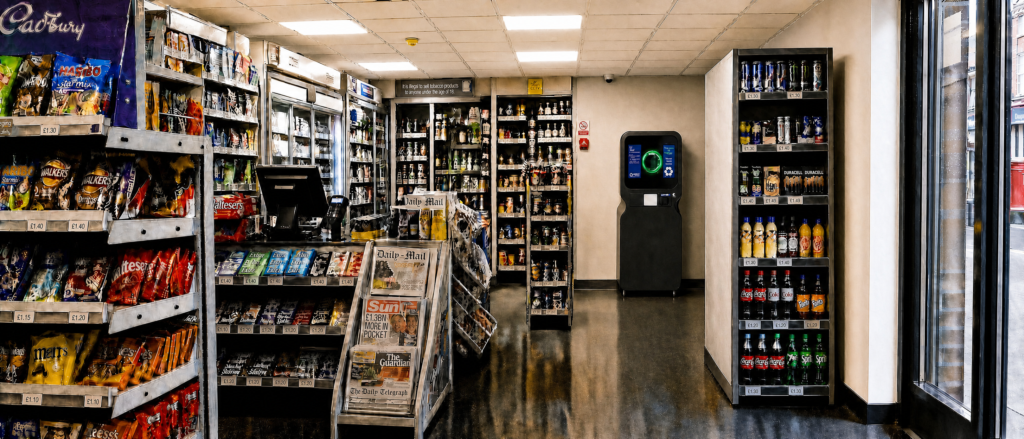
1. Rethinking return point ROI
Reverse vending machines are often seen as functional infrastructure that takes up valuable retail space. But in practice, they also bring customers into the store
A shopper returning containers usually arrives with a clear reason to visit, some amount of deposit value to spend, and often a high willingness to make an immediate purchase. That makes return points a reliable source of footfall and incremental sales.
The right way to evaluate a recycling solution is not only by machine cost or container capacity, but by the value it creates in relation to the space it occupies.
In other words: if a compact RVM occupies only a small footprint but consistently drives visits, it can support both compliance and sales.
For retailers, that means the goal is not simply to install a collection point. The goal is to place it in a way that preserves selling space, supports shopper flow, and creates opportunities for impulse purchases.
2. The three spatial bottlenecks in retail planning
When recycling infrastructure is added to smaller store formats, three common bottlenecks tend to appear:
-
Entrance and circulation: If the machine is placed directly in front of the entrance, it can block movement and make the store feel cramped. The placement should support flow, not interrupt it.
-
Back-of-house storage: Traditional systems often require space for sorting bins and servicing. In smaller stores, that can reduce storage capacity for inventory and create operational friction.
-
Staff access and customer flow: Emptying bins, maintenance, and servicing must be easy for staff. At the same time, these tasks should not interfere with the shopping experience.
Good retail planning solves these issues early, before they become daily operational problems.
3. Choosing the right infrastructure for the right format
Not every store needs the same recycling setup. The best solution depends on format, traffic, and available space.
| Retail Format | Main Constraint | Infrastructure Focus |
|---|---|---|
| Hypermarkets and large supermarkets | High-volume throughput | High-capacity backroom sorting systems |
| Urban convenience stores and express formats | Limited floor space | Compact RVMs with a minimal footprint |
| Transit hubs and kiosks | High footfall, zero storage room | Compact automated RVMs with remote IoT monitoring |
The point is simple: compact automation does not replace larger systems. It extends collection capability into places where traditional setups are too large or too disruptive.
4. A practical checklist for store operators
Before selecting a reverse vending solution, evaluate your venue against four core criteria:
Does it preserve active sales space? The machine should support the store’s commercial footprint, not reduce it unnecessarily.
Can it fit into existing architectural gaps or side areas? Look for underused corners, wall-adjacent zones, or areas that do not interrupt shopper flow.
Is it easy for staff to service? Bin clearing and routine maintenance should be simple and safe without requiring a dedicated backroom.
Can it be monitored remotely? Digital IoT connectivity helps prevent overflow, provides clear operational data, and reduces manual checks.
These are not just technical questions. They are store design questions.
.
Conclusion
Preparing for PPWR 2029 is not only about meeting a regulatory target. It is also an opportunity to improve store design, increase footfall, and make better use of limited space.
For compact retail formats, the best recycling solution is the one that fits naturally into the layout, supports customer flow, and protects revenue-generating floor space.
In that sense, spatial efficiency is not a side issue. It is part of the business case.